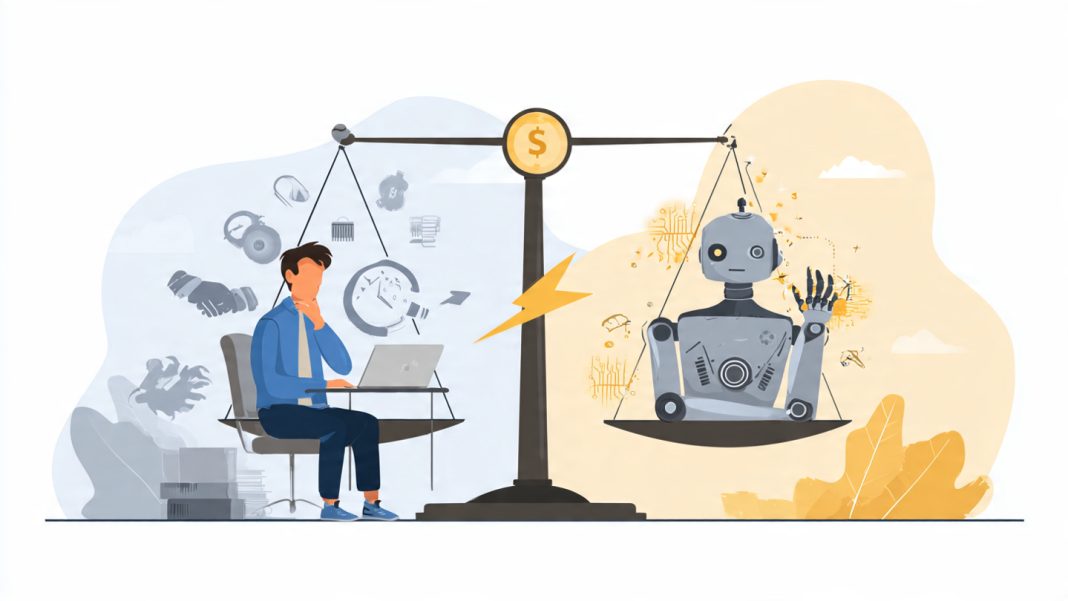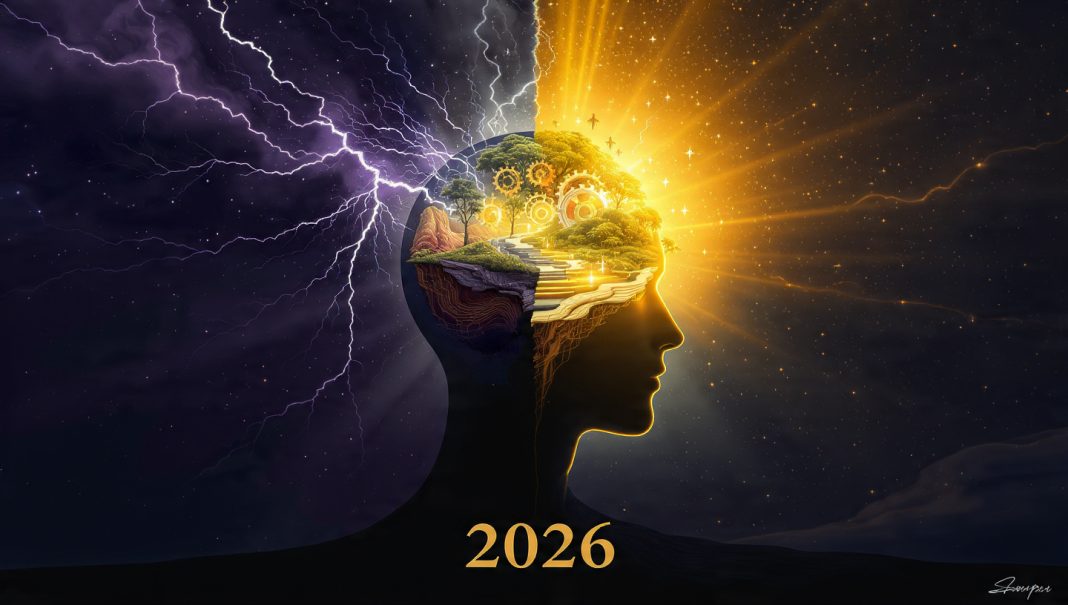
For decades, the answer was relatively straightforward: work hard, climb the ladder, acquire skills, and build a career. But the ground has shifted beneath our feet. AI is reshaping industries. The nature of work is being redefined. The old ladders are collapsing, and new ones ones we never imagined are emerging.
What does it mean to be successful in 2026?
In this new landscape, the single greatest predictor of success is no longer your IQ, your technical skills, or even your network. It’s your mindset.
The psychology of success has always been important, but in 2026, it’s everything. The ability to adapt, to learn continuously, to regulate your emotions in the face of uncertainty, and to find meaning in chaos these are the new superpowers.
At PeakFlow, we’ve spent years studying the mental habits of high achievers. This guide synthesizes that knowledge into seven essential mindset shifts you need to not just survive, but thrive in the years ahead. This is the new psychology of success for a world being rewritten by AI.
Why Mindset Matters More Than Ever in 2026
Before we dive into the shifts, let’s understand why mindset has become the critical differentiator.
The Pace of Change is Exponential: The half-life of skills is shrinking. What made you successful five years ago may be irrelevant today. A fixed mindset the belief that your abilities are static is a death sentence in a rapidly evolving world. A growth mindset—the belief that you can develop your abilities through effort and learning—is your only viable strategy.
AI is a Mindset Amplifier: AI tools are now available to everyone. The difference between those who use them to thrive and those who are displaced by them is not technical prowess; it’s mindset. Do you see AI as a threat or an opportunity? Do you approach it with curiosity or fear? Your answer will determine your future. As we explored in our guide on high-income skills AI won’t replace, the skills that remain are fundamentally human curiosity, empathy, judgment all of which are rooted in mindset.
Uncertainty is the New Normal: Economic volatility, geopolitical instability, and technological disruption are constants. Resilience—the ability to bounce back from setbacks is no longer a nice-to-have; it’s a survival mechanism. And resilience is a mindset skill that can be cultivated.
Mindset Shift #1: From Fixed to Growth
This is the foundational shift, first popularized by psychologist Carol Dweck, and it’s more relevant than ever.
- Fixed Mindset: Believes that intelligence and talent are static. You either have it or you don’t. Challenges are avoided for fear of failure. Effort is seen as fruitless. Feedback is taken as personal criticism.
- Growth Mindset: Believes that abilities can be developed through dedication and hard work. Challenges are embraced as opportunities to grow. Effort is seen as the path to mastery. Feedback is welcomed as a source of learning.
How to Cultivate It in 2026:
- Reframe “Failure” as “Data”: When something doesn’t work out, don’t say “I failed.” Say, “I learned what doesn’t work, and I have data to inform my next attempt.” This simple linguistic shift changes your brain’s relationship with setbacks.
- Embrace the Word “Yet”: “I don’t understand this AI tool… yet.” “I haven’t closed that client… yet.” This tiny word opens the door to possibility.
- Celebrate Effort, Not Just Outcomes: When you achieve something, acknowledge the process, the practice, and the persistence that got you there, not just the result.
Mindset Shift #2: From Scarcity to Abundance
The scarcity mindset is rooted in fear: there’s not enough success, not enough clients, not enough opportunity to go around. This leads to comparison, jealousy, and hoarding.
The abundance mindset, by contrast, believes there is plenty for everyone. Opportunities are plentiful. Collaboration is more powerful than competition. Someone else’s success doesn’t diminish your own chances.
Why It Matters in 2026:
AI is creating new industries, new roles, and new forms of value we haven’t even imagined yet. The pie is expanding. Those who operate from an abundance mindset are positioned to see and seize these new opportunities. Those stuck in scarcity will fight over the shrinking crumbs of the old economy.
How to Cultivate It:
- Practice Gratitude Daily: Start or end each day by listing three things you’re grateful for. This trains your brain to scan the world for abundance rather than lack.
- Celebrate Others’ Success: When a peer achieves something, genuinely celebrate them. This sends a signal to your own brain that success is possible and desirable.
- Shift from “Either/Or” to “And”: Instead of thinking “I can either have a successful career OR a fulfilling personal life,” ask “How can I have a successful career AND a fulfilling personal life?” This opens up creative solutions.
Mindset Shift #3: From Perfectionism to Iteration
Perfectionism is the enemy of progress. In a fast-moving world, waiting for the perfect moment, the perfect product, or the perfect plan means you’ll never start.
The iterative mindset values progress over perfection. It’s about launching a “good enough” version, learning from real-world feedback, and continuously improving. This is the core philosophy of the tech world—”move fast and break things”—applied to your personal and professional life.
Why It Matters in 2026:
AI enables rapid prototyping and iteration like never before. You can generate content, build simple tools, and test ideas in hours instead of weeks. Those who embrace iteration will learn and adapt faster. Those waiting for perfection will be left behind. This aligns perfectly with the automated sales funnel philosophy of launching, learning, and iterating.
How to Cultivate It:
- Adopt the 80% Rule: If something is 80% of the way to “perfect,” it’s ready to launch. The remaining 20% will be informed by real-world feedback.
- Set Time Boxes: Give yourself a strict deadline for a first draft or a first version. “I will have a basic version of this done in 3 hours, and then I’ll get feedback.”
- Reframe Mistakes as Learning Experiments: Every imperfect launch is an experiment that yields valuable data. What did you learn? What will you do differently next time?
Mindset Shift #4: From Reactive to Proactive (The Locus of Control Shift)
People with an external locus of control believe that life happens to them. Their circumstances, other people, or luck determine their outcomes. They are reactive.
People with an internal locus of control believe that they are the primary agents of their own lives. While they can’t control everything, they can control their responses, their efforts, and their attitudes. They are proactive.
Why It Matters in 2026:
In a world of constant disruption, it’s easy to feel like a victim of forces beyond your control—AI, the economy, “the algorithm.” Those with an internal locus of control ask a different question: “Given these circumstances, what can I do?” This sense of agency is a powerful buffer against anxiety and burnout.
How to Cultivate It:
- Focus on Your Circle of Control: Identify what you can directly control (your effort, your attitude, your responses) and what you cannot (the economy, other people’s opinions, AI’s trajectory). Invest your energy in the former.
- Use Proactive Language: Replace “I have to” with “I choose to.” Replace “I can’t” with “I won’t” or “How can I?” This reminds you that you have choices.
- Take Small, Consistent Actions: When you feel overwhelmed, break the situation down and take one small, concrete action. Action breeds a sense of control.
Mindset Shift #5: From Isolation to Connection
The myth of the “lone genius” is just that—a myth. Success in any domain is almost always a team sport. It requires mentors, collaborators, supporters, and a community.
Yet, in our hyper-connected digital world, many of us are more isolated than ever. We have hundreds of “friends” online but no one to call in a crisis. This isolation is toxic to mental health and, by extension, to success.
Why It Matters in 2026:
As AI takes over more technical tasks, uniquely human skills like empathy, collaboration, and relationship-building become more valuable. The ability to build genuine connections, to inspire trust, and to work effectively with others is a superpower. Furthermore, a strong support network is your best defense against founder burnout.
How to Cultivate It:
- Prioritize Deep Relationships: Invest time and energy in a small number of close relationships. Quality trumps quantity.
- Seek Mentors and Peers: Actively look for people who are a few steps ahead of you (mentors) and those who are on a similar path (peers). Mastermind groups, accountability partnerships, and industry communities are invaluable.
- Be the One Who Reaches Out: Don’t wait for others to connect with you. Be the initiator. Send the message, schedule the coffee chat, offer the helping hand.
Mindset Shift #6: From Avoiding Discomfort to Embracing It (Antifragility)
Nassim Nicholas Taleb introduced the concept of “antifragility”—things that gain from chaos, volatility, and stress. Your muscles are antifragile: they grow stronger when you stress them with exercise. Your immune system is antifragile: it becomes more robust when exposed to pathogens.
The same is true for your mindset. Avoiding discomfort, challenge, and stress makes you fragile. Embracing them—within reason—makes you antifragile.
Why It Matters in 2026:
The world is volatile. Avoiding risk and seeking comfort is a recipe for brittleness. When the inevitable disruption comes, the fragile break. The antifragile adapt and grow stronger. This is the essence of mental resilience training—building the muscle to handle stress and emerge stronger on the other side.
How to Cultivate It:
- Seek Out Discomfort: Regularly put yourself in situations that are slightly outside your comfort zone. Give a presentation, have a difficult conversation, learn a new skill that feels awkward. This builds your “discomfort tolerance.”
- Reframe Stress: Instead of seeing stress as your enemy, learn to see it as a signal that you’re growing. The body’s stress response is the same whether you’re facing a threat or rising to a challenge. Your interpretation matters.
- Practice “Post-Traumatic Growth”: When you face a significant setback, actively look for ways you have grown because of it. What did you learn? How are you stronger? What new possibilities have opened up?
Mindset Shift #7: From Outcome to Process (The Flow State)
Society conditions us to be relentlessly focused on outcomes: the promotion, the sale, the milestone. But an exclusive focus on outcomes leads to anxiety (if you’re not there yet) and emptiness (once you arrive).
The process mindset finds meaning and satisfaction in the doing itself. It’s about showing up, doing the work, and finding joy in the craft, regardless of the immediate result. This is the gateway to the flow state—that state of total immersion where time disappears and you’re performing at your peak.
Why It Matters in 2026:
In a world of instant gratification and dopamine hits, the ability to find deep satisfaction in sustained effort is a rare and powerful advantage. It’s the key to mastering difficult skills, producing work of lasting value, and building a career that doesn’t lead to burnout.
How to Cultivate It:
- Fall in Love with the Practice: Whether it’s writing, coding, selling, or designing, find the aspect of the work itself that you genuinely enjoy. Focus on that.
- Set Process Goals, Not Just Outcome Goals: Instead of “I will close $100k in sales,” try “I will make 20 high-quality outreach calls every day.” The outcome goal is out of your control; the process goal is entirely within it.
- Celebrate Daily Consistency: Acknowledge and appreciate the days when you simply show up and do the work, regardless of the result. This builds the habit of consistency.
The Mindset Toolkit: Practical Exercises for 2026
Here are three simple, science-backed exercises to train your mindset daily.
| Exercise | Time | What to Do | The Science |
|---|---|---|---|
| The Morning Mindset Journal | 5 mins | Write down: 1) Three things I’m grateful for. 2) One thing I’m excited about today. 3) My intention for the day (e.g., “Today, I will approach challenges with curiosity.”). | Primes your brain for positivity, purpose, and proactive intention. |
| The Afternoon Reframe | 2 mins | When you hit a roadblock, pause and ask: “What is one way I can grow from this?” or “What is one thing I can control in this situation?” | Shifts your brain from a stressed, reactive state to a proactive, growth-oriented one. |
| The Evening Learning Review | 5 mins | Before bed, ask: “What did I learn today?” and “What would I do differently?” This applies to successes and failures equally. | Reinforces a growth mindset by treating every experience as a source of learning. |
Real-World Case Study: “Elena’s” Mindset Transformation
Meet Elena, a 42-year-old marketing director at a mid-sized tech company. When generative AI exploded onto the scene, Elena panicked. Her team was asked to do more with less, and she saw her role as potentially obsolete. She was anxious, defensive, and constantly comparing herself to younger colleagues who seemed to embrace the new tools with ease.
Elena was stuck in a fixed, scarcity mindset. She saw AI as a threat and her age as a liability.
The Intervention:
Elena began working with a PeakFlow coach. We focused on three key mindset shifts:
- Fixed to Growth: We reframed AI not as a replacement for her skills, but as a tool to amplify them. She started taking online courses on AI prompting and marketing automation.
- Scarcity to Abundance: Instead of seeing her younger colleagues as competitors, she saw them as potential collaborators. She initiated a “lunch and learn” where they shared AI tips, and she shared her deep strategic and industry knowledge.
- Reactive to Proactive: She stopped waiting for her company to dictate her role and started proposing new projects that leveraged both her strategic expertise and her newly acquired AI skills.
The Result:
Within six months, Elena wasn’t just safe in her job; she was thriving. She had led the development of a new AI-powered marketing campaign that became a company benchmark. She was promoted to a new role: Director of Marketing Innovation. Her mindset shift didn’t just save her career; it launched it into a new, more exciting trajectory.
Common Mindset Traps to Avoid
- The Comparison Trap: Measuring your success against others is a guaranteed path to misery. Compare yourself only to who you were yesterday.
- The Certainty Trap: Believing you need to have everything figured out before you start. Embrace uncertainty as the space where growth happens.
- The Busyness Trap: Confusing activity with productivity. A growth mindset is about learning and progress, not just staying busy.
- The Comfort Trap: Staying in situations that feel safe but offer no room for growth. Discomfort is the currency of growth.
FAQ: The Psychology of Success
Q: Can mindset really be changed, or are we stuck with what we have?
A: Absolutely, mindset can be changed. This is the core insight of neuroplasticity—your brain is constantly rewiring itself based on your thoughts and experiences. The shifts we’ve outlined are skills that can be practiced and strengthened, just like a muscle.
Q: How long does it take to shift a mindset?
A: It varies. Some shifts can happen in an instant—a moment of insight that reframes everything. But for deep, lasting change, consistent practice over weeks and months is required. Think of it as a lifelong practice, not a one-time fix.
Q: What if I try to shift my mindset but keep falling back into old patterns?
A: This is completely normal. The brain has well-worn neural pathways. When you’re stressed, you’ll default to them. The key is not to judge yourself for falling back, but to gently notice it and guide yourself back to the new path. This “noticing and returning” is the very practice that strengthens the new mindset.
Q: Is a growth mindset about being positive all the time?
A: No. It’s not toxic positivity. It’s about acknowledging reality—including difficulties and negative emotions—while maintaining the belief that you can learn, adapt, and grow through them. It’s realistic optimism.
Q: How does mindset relate to emotional intelligence?
A: Deeply. Emotional intelligence—the ability to understand and manage your own emotions and those of others—is a key component of a mature growth mindset. Both are essential for navigating complex human interactions and building the relationships that underpin success.
Conclusion: Your Mindset is Your Competitive Advantage
In 2026, the most important asset you own isn’t your house, your car, or even your technical skills. It’s your mindset. It’s the lens through which you see the world, and it determines everything—how you respond to challenges, how you learn, how you relate to others, and ultimately, how successful you become.
The shifts we’ve explored—from fixed to growth, scarcity to abundance, perfectionism to iteration—are not just abstract concepts. They are practical, trainable skills that will determine your trajectory in the years ahead.
The world is changing faster than ever. But the human mind, with its incredible capacity for adaptation and growth, remains our greatest resource. Invest in yours. Start with one shift, practice it daily, and watch as your external reality begins to transform to match your new internal landscape.
Your mindset is your competitive advantage. Cultivate it wisely.
Dr. Israr Ahmad is a professional counselor and wellness expert focused on the mental health of high-achievers. Through the PeakFlow pillar at Ethonce, he provides science-backed strategies for digital wellness, executive focus, and burnout recovery. He believes that true success is built from the inside out.