You have a great product. You have a steady stream of traffic. But your revenue feels like a leaky bucket. People visit your site, maybe even sign up for your newsletter, but they rarely become paying customers. You’re left wondering: Where are they going? Why aren’t they buying?
If this sounds familiar, you’re not alone. The problem isn’t your product or your traffic. The problem is the gap between them. You lack a system—a predictable, automated process that guides a stranger from their first click all the way to becoming a happy, paying customer. You lack a sales funnel.
In 2026, a manual, haphazard approach to sales is a recipe for burnout and bankruptcy. The solopreneurs and small businesses that thrive are the ones who have built automated systems that work while they sleep. As we discussed in our guide on automating lead generation with AI agents, the future belongs to those who leverage technology to scale their efforts.
This is AutoSolo’s definitive guide to setting up your first automated sales funnel. By the end of this article, you’ll have a clear, actionable blueprint to turn your traffic into a self-filling pipeline of paying customers.
What Exactly is an Automated Sales Funnel?
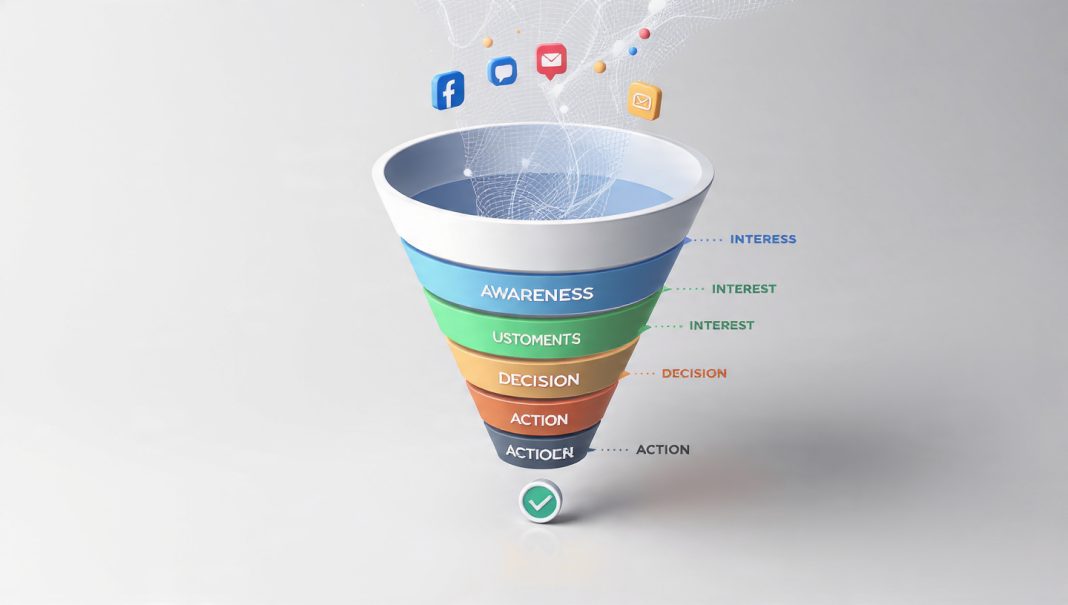
Let’s demystify the jargon. A sales funnel is simply a visual representation of your customer’s journey. It’s wide at the top (where many people first hear about you) and narrow at the bottom (where a smaller percentage actually buy).
An automated sales funnel uses software and pre-written sequences to move people through this journey without you having to lift a finger for every single prospect. It’s like having a 24/7 virtual sales team that nurtures leads, answers their questions, and gently guides them toward a purchase.
The core stages of any effective funnel are:
- Awareness (Top of Funnel – TOFU): A stranger discovers you through content, social media, ads, or search.
- Interest (Middle of Funnel – MOFU): The visitor shows interest by opting in—typically by giving you their email address in exchange for something valuable (a lead magnet).
- Decision (Middle of Funnel – MOFU): You nurture the relationship by providing value and building trust, educating them on their problem and your solution.
- Action (Bottom of Funnel – BOFU): The lead makes a purchase, books a call, or takes your desired conversion action.
- Retention (Post-Purchase): The funnel doesn’t end at the sale. You continue to deliver value, encouraging repeat purchases and referrals.
Why You Need an Automated Funnel in 2026
The days of “spray and pray” marketing are long gone. Here’s why automation is no longer optional.
- Predictable Revenue: An automated funnel turns your marketing from a chaotic gamble into a predictable, measurable system. You know that for every 100 people who enter the top, roughly X will buy at the bottom. This allows you to scale with confidence.
- Time Freedom: Imagine generating sales while you sleep, travel, or work on other parts of your business. An automated funnel makes this a reality. You’re not trading time for money; you’re building an asset.
- Better Customer Experience: Automation, done right, is not impersonal. It’s about delivering the right message to the right person at the right time. A new subscriber gets a welcome sequence introducing your brand. A cart abandoner gets a gentle reminder. A happy customer gets an upsell offer. This feels like magic to the user, but it’s just smart automation.
- Scaling Without Hiring: As a solopreneur, your time is your most limited resource. An automated funnel allows you to handle hundreds or even thousands of leads without needing to hire a team. This is the essence of the solopreneur tech stack—doing more with less.
The Anatomy of a High-Converting Automated Funnel
Not all funnels are created equal. A high-performing automated sales funnel in 2026 has several key components.
| Funnel Stage | Goal | Key Components | Automation Trigger |
|---|---|---|---|
| 1. Lead Capture (TOFU) | Convert a visitor into a known lead. | High-converting landing page, compelling lead magnet (PDF, checklist, video training), opt-in form. | Form submission. |
| 2. Welcome & Nurture (MOFU) | Build trust, deliver value, and educate on the problem. | Automated email sequence (3-7 emails). Provide useful content, share your story, address common objections. | New subscriber added to list. |
| 3. Engagement Tracking (MOFU) | Identify hot leads based on their behavior. | Tagging and segmentation based on email opens, link clicks, and page visits. | Lead clicks a specific link (e.g., “pricing” or “features”). |
| 4. The Offer (BOFU) | Present your product/service as the solution. | Sales page, checkout system, or calendar link for a discovery call. | Lead reaches a certain “score” or clicks on a “buy now” link in a nurture email. |
| 5. Follow-Up & Upsell (Post-Purchase) | Maximize customer lifetime value. | Post-purchase thank you page, delivery of product, upsell/cross-sell offers, request for review. | Successful purchase transaction. |
Tools of the Trade: Building Your Funnel Stack in 2026
You don’t need a single, monolithic platform to build your funnel. In fact, the best approach is often to connect best-in-class tools using automation bridges. Here’s a recommended stack.
| Category | Tool Name | Key Feature | Why It Works |
|---|---|---|---|
| Landing Page Builder | Carrd | Simple, beautiful, one-page site builder with a generous free plan. | Perfect for simple, high-converting opt-in pages. |
| System.io | All-in-one platform with landing pages, email marketing, and checkout. | Great for beginners who want everything in one place. | |
| Email Marketing & Automation | ConvertKit | Visual automation builder, powerful tagging, and audience segmentation. | Built specifically for creators and solopreneurs to nurture audiences. |
| Beehiiv | Newsletter platform with built-in growth tools and automation. | Ideal if your funnel is content-driven and focused on newsletter growth. | |
| Automation Bridge | Make (formerly Integromat) | Advanced visual platform to connect apps and create complex, conditional workflows. | The “glue” that connects your landing page, email, CRM, and payment tools. |
| Zapier | User-friendly automation for connecting thousands of apps. | Simpler than Make, perfect for standard funnel connections. | |
| Checkout & Payments | Stripe | Developer-friendly payment processing with robust APIs. | The gold standard for accepting payments online. |
| Gumroad | All-in-one platform for selling digital products, with built-in customer management. | Best for solopreneurs selling e-books, courses, or templates. | |
| CRM (Optional) | HubSpot (Free) | Free CRM to track leads and deals as they move through your funnel. | Essential once you have high-ticket sales or a sales team. |
Step-by-Step: Building Your First Automated Funnel
Let’s move from theory to practice. We’ll build a simple but effective funnel for a fictional product: a “Productivity for Solopreneurs” e-book.
Step 1: Create Your Lead Magnet and Landing Page
Your lead magnet is the “bribe” you offer in exchange for an email address. It must be incredibly valuable and directly related to your paid offer.
- Lead Magnet Idea: “The Solopreneur’s 5-Day Productivity Kickstart” — a PDF checklist and video series.
- Action: Use Carrd to build a simple landing page. The headline should be benefit-driven: “Double Your Daily Output Without Burning Out.” The page should have:
- A compelling headline and sub-headline.
- A bulleted list of what they’ll learn.
- A simple opt-in form (Name and Email).
- A single call-to-action button: “Send Me the Free Guide!”
Step 2: Connect Your Landing Page to Your Email Provider
This is where the automation begins.
- Action: Create a new form in ConvertKit (or your chosen email tool) and copy the embed code for your Carrd page. Now, when someone enters their email, they are automatically added to a specific “Productivity Lead” tag in ConvertKit. This tagging is crucial for segmentation.
Step 3: Set Up Your Welcome & Nurture Sequence
This is the heart of your funnel. It’s an automated email sequence that delivers the lead magnet and then builds a relationship.
Email 1 (Immediate Delivery):
- Subject: Your Productivity Kickstart is Here!
- Content: Thank them, deliver the PDF link, and set expectations for the next few days.
Email 2 (Day 2 – Value):
- Subject: The #1 Productivity Mistake Solopreneurs Make
- Content: Share a personal story about your own struggle with productivity and the key insight that helped you turn it around. No hard sell.
Email 3 (Day 4 – Soft Sell/Bridge):
- Subject: From Chaos to Calm (Your 5-Day Journey)
- Content: Recap the value from the lead magnet. Then, introduce the idea that for lasting change, many people need a deeper system. Casually mention your e-book: “This is exactly why I wrote my book, ‘The Focused Solopreneur.’ It’s a complete system for…”
Email 4 (Day 7 – Direct Offer):
- Subject: Ready to Master Your Focus?
- Content: A more direct pitch for your e-book. Include testimonials, a link to the sales page, and a clear call to action. End with a question: “What’s the one thing you’d accomplish with laser-like focus?”
Step 4: Track Engagement and Segment
As these emails go out, your email tool will track who opens and clicks.
- Action: In ConvertKit, create a rule: “If a lead clicks the link to the e-book sales page (Email 4) but doesn’t buy, add them to a ‘Hot Lead – Ebook Interest’ tag.”
- Why: This allows you to send a more targeted follow-up sequence to these “hot leads” a few days later, perhaps offering a limited-time discount or a personal Q&A call. This is the kind of sophisticated behavior we explored in our no-code newsletter system guide.
Step 5: Close the Loop with a Thank You
When someone finally purchases, they should enter a new, post-purchase flow.
- Action: Connect your checkout (e.g., Gumroad) to your email tool via Zapier or Make. When a sale is made, the trigger should:
- Remove them from all nurture sequences (so they don’t keep getting the sales pitch).
- Add them to a “Customer” tag.
- Trigger a “Thank You” email sequence with product delivery, onboarding tips, and an ask for a review or testimonial.
Real-World Case Study: The Course Creator Who Automated Her Way to Freedom
Meet Sarah, a freelance graphic designer we first profiled in our no-code newsletter guide. Sarah wanted to launch an online course teaching other designers how to use AI tools. Initially, she planned to do it all manually: promoting on social media, answering DMs, and sending individual emails. She was exhausted before she even started.
We helped her build a simple automated funnel using System.io (for landing pages and email) and Stripe (for payments).
The Funnel:
- Lead Magnet: A free “10 AI Prompts Every Designer Needs” PDF.
- Nurture Sequence: A 5-email sequence over 10 days. Emails 1-3 delivered value and shared her journey. Email 4 introduced the course concept. Email 5 made the offer with a limited-time launch discount.
- The Offer: A link to the course sales page, built directly in System.io.
- The Result: Sarah launched her course while on a family vacation. She didn’t send a single manual DM. Her automated funnel generated $12,000 in sales in the first 30 days without her being online. By setting up the system, she bought herself time and freedom.
Common Funnel Mistakes to Avoid
- Driving Traffic to a Dead End: If you send people to a page with no clear next step, you lose them. Every page should have one clear call-to-action.
- A Weak Lead Magnet: A “Subscribe to my newsletter” button is not a lead magnet. You need something so valuable that people are happy to exchange their email for it.
- Trying to Sell Too Soon: Your welcome email should not be a sales pitch. It should deliver the value you promised and start building a relationship. Sell after you’ve earned the right to be heard.
- Ignoring Mobile Optimization: Over 60% of emails are opened on mobile devices. Your emails and landing pages must look perfect on a small screen.
- Setting It and Forgetting It: A funnel is a living system. Review your analytics monthly. Where are people dropping off? Which emails get the most clicks? Use this data to continuously improve your funnel.
FAQ: Automated Sales Funnels
Q: How much does it cost to build an automated sales funnel?
A: You can start for as little as $0-$50/month. Carrd is free for simple pages. ConvertKit has a free plan for up to 1,000 subscribers. Stripe and Gumroad take a small percentage per transaction. As you scale, your tool costs will increase, but so will your revenue.
Q: Do I need a website to have a sales funnel?
A: No. Your landing page (built with Carrd, System.io, etc.) is your website for the purpose of the funnel. You can direct all traffic there. A separate website is helpful for branding and SEO, but not strictly necessary to start selling.
Q: How do I get traffic to my funnel?
A: Traffic is the fuel for your funnel. Common sources include:
- Organic Social: Sharing valuable content on LinkedIn, Twitter, or Instagram.
- Content Marketing: Writing blog posts (like this one!) that rank in search engines.
- Paid Ads: Running targeted ads on Facebook, Instagram, or Google.
- Guesting: Appearing on podcasts or writing guest posts for other blogs in your niche.
Q: What’s the difference between a sales funnel and a website?
A: A website is a destination—a collection of information. A sales funnel is a journey—a carefully designed path that leads to a specific action. Your website can be the top of your funnel, but the funnel itself is the automated process that follows.
Q: Can I have multiple funnels for different products?
A: Absolutely. In fact, you should. A healthy business has multiple funnels: one for your main product, one for a low-ticket introductory offer, one for a high-ticket service, etc. Your email marketing tool should allow you to manage these separate audiences and funnels easily.
The Future: AI-Powered Dynamic Funnels
Looking ahead to the rest of 2026 and beyond, sales funnels are becoming smarter and more dynamic. Instead of a static sequence that everyone goes through, AI-powered funnels can adapt in real-time based on user behavior.
Imagine a funnel where the AI analyzes a lead’s interaction with your emails and your website. If it detects that they are price-sensitive, it might automatically send them a sequence focused on value and ROI. If it detects they are a “skimmer,” it might send them video content instead of long emails. This level of personalization at scale is the next frontier, powered by the same kind of AI agents we discussed in our lead generation guide.
Conclusion: Build Your System, Reclaim Your Time
An automated sales funnel is the single most important business asset you can build as a solopreneur. It transforms your business from a chaotic collection of tasks into a predictable, scalable system that generates revenue on autopilot.
It doesn’t have to be perfect from day one. Start with a simple lead magnet, a single landing page, and a basic email sequence. Launch it, learn from it, and iterate.
Your 2026 Action Plan:
- Brainstorm: What valuable lead magnet could you create this week?
- Choose: Pick one tool from our list to host your landing page and emails.
- Build: Set up your opt-in page and a 3-email welcome sequence.
- Drive Traffic: Share your new lead magnet on your favorite social platform.
- Analyze & Improve: Look at your data in 30 days and make one improvement.
Your future self—the one with a steady stream of customers and free time on their calendar—is waiting for you to start building today.
Inaayat Chaudhry is the Solopreneurship & Automation Lead (AutoSolo) at Ethonce, dedicated to helping individuals build scalable “one-person” businesses with the power of AI and smart systems.