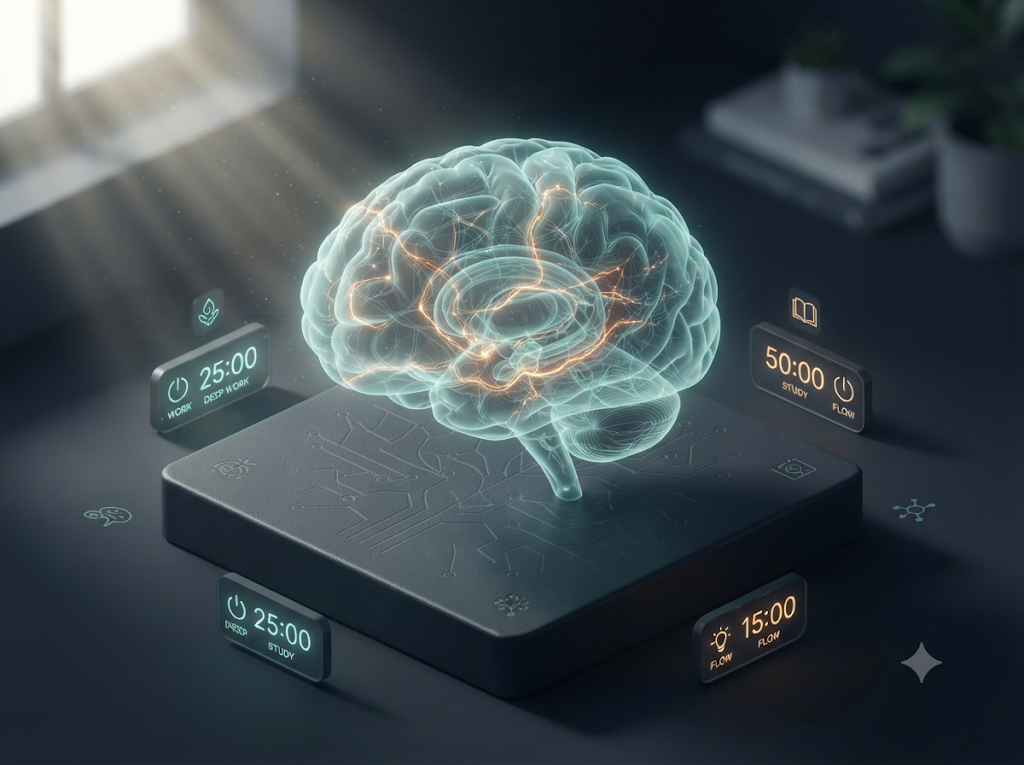
When your brain is starved for baseline dopamine, even simple tasks feel like pushing a boulder uphill. You open five browser tabs, check your phone every four minutes, and end the workday exhausted with your most important project untouched.
While prescription stimulants are a cornerstone of clinical ADHD management, many remote founders, students, and knowledge workers look for natural focus boosters to support their daily executive function—either alongside medical care or as a standalone behavioral stack for improving focus naturally.
Below is an evidence-based, 2027-ready non-stimulant dopamine protocol combining behavioral neuroscience levers and targeted nutritional foundations.
Medical Disclaimer: This article is for educational and informational purposes only and does not constitute medical advice. Always consult a qualified healthcare professional before starting new supplements or altering any prescribed ADHD treatment plan.
⚡ Key Takeaways (TL;DR Executive Summary)
Behavior First, Supplements Second: Protecting deep sleep, strategic morning movement, and visual fixation training reset dopamine receptor sensitivity far more reliably than pills alone.
Targeted Nutrients: Omega-3s (EPA/DHA), L-Theanine, L-Tyrosine, and Zinc/Magnesium act as biological building blocks for calm alertness and neurotransmitter synthesis.
Protect Your Baseline: Avoid stacking too many stimulatory tools at once; sustainable focus comes from steady baseline dopamine, not artificial spikes and crashes.
Comparison Matrix: The 7 Non-Stimulant Dopamine Levers
| Protocol Lever | Category | Onset Time | Primary Mechanism |
| 1. Pre-Work Aerobic Movement | Behavioral | Immediate (1–2 hrs) | Boosts cerebral blood flow, BDNF, and natural dopamine release |
| 2. Visual Fixation Training | Behavioral | Immediate (1–3 mins) | Activates prefrontal attention circuits before deep work |
| 3. Time-Blocking (Monotasking) | Structural | Immediate | Eliminates context-switching dopamine drain |
| 4. NSDR / Deep Sleep Reset | Recovery | Overnight / 10 mins | Replenishes striatal dopamine reserves and clears metabolic waste |
| 5. L-Theanine (Calm Alertness) | Nutritional | 30–60 mins | Increases alpha brain waves and modulates GABA/dopamine |
| 6. L-Tyrosine (Dopamine Precursor) | Nutritional | 30–60 mins | Provides raw amino acid substrate for dopamine synthesis |
| 7. Omega-3 + Zinc/Magnesium | Foundational | 4–12 weeks | Supports long-term cell membrane health and cofactor synthesis |
1. Strategic Pre-Work Movement (The BDNF Primer)
A single 20-minute session of moderate aerobic exercise—such as brisk walking, cycling, or a quick bodyweight circuit—can elevate concentration and executive function for one to two hours afterward.
- Why It Works: Physical movement increases blood flow to the prefrontal cortex and triggers the release of BDNF (Brain-Derived Neurotrophic Factor) alongside natural catecholamines (dopamine and norepinephrine).
- How to Apply It: Schedule 15–20 minutes of movement immediately before your hardest cognitive block of the day rather than waiting until the evening. During work, subtle fidgeting (like tapping a foot or using a standing desk) can also help channel excess motor restlessness without breaking focus.
2. 1-to-3 Minute Visual Fixation Training
Your cognitive focus follows your visual focus. When your eyes dart across notifications, Slack messages, and multiple monitors, your brain stays locked in a scattered, high-alert state.
- Why It Works: Behavioral neuroscience research shows that deliberately holding your gaze on a single static point (like a dot on the wall or the center of your screen) for 60 to 180 seconds—while blinking naturally—recruits the brain’s neural circuits responsible for sustained attention.
- How to Apply It: Before starting a deep-work sprint, stare calmly at a single focal point on your desk or wall for 90 seconds. Once your mind settles, immediately transition straight into your primary task.
3. Strict Time-Blocking to Stop Dopamine Leakage
Multitasking does not divide your attention; it fragments and exhausts it. Every time you switch from writing a report to answering a quick message, your brain pays a heavy “attention residue” tax, rapidly burning through limited dopamine reserves.
- Why It Works: Time-blocking removes constant micro-decisions about what to do next, shielding your executive function from decision fatigue.
- How to Apply It: Work in 25-to-50 minute monotasking blocks with your phone in another room and email tabs closed. Pair each block with a 5-to-10 minute screen-free break so your brain can reset without scrolling social media.
4. Deep Sleep & Non-Sleep Deep Rest (NSDR)
No supplement or productivity app can out-perform a sleep-deprived brain. During deep sleep, your brain clears metabolic waste and resets dopamine receptor sensitivity—the exact mechanism that governs next-day motivation and impulse control.
- Why It Works: Chronic sleep restriction mimics and amplifies ADHD symptoms. Even a short 10-minute afternoon reset using Non-Sleep Deep Rest (NSDR) or breath-focused meditation can measurably replenish mental energy.
- How to Apply It: Protect a consistent 7–9 hour sleep window and block artificial blue light 90 minutes before bed (see our Blue Light Glasses vs Circadian Lighting sleep audit). When afternoon brain fog hits, run a quick 5-minute NSDR mindfulness protocol instead of reaching for a late-day espresso.
5. L-Theanine for Calm, Non-Jittery Alertness
Found naturally in green tea leaves, L-Theanine is one of the most well-tolerated natural focus boosters for people who want mental clarity without the anxiety or crash of heavy stimulants.
- Why It Works: L-Theanine promotes alpha brain wave activity—associated with a state of “wakeful relaxation”—while gently modulating dopamine and GABA pathways.
- How to Apply It: Typical research-backed amounts range from 100–200 mg. It works effectively on its own for calm focus, or paired with a modest cup of green tea or coffee to smooth out caffeine jitters.
6. L-Tyrosine (The Targeted Dopamine Precursor)
L-Tyrosine is a naturally occurring amino acid that serves as the direct biological precursor to dopamine, norepinephrine, and epinephrine.
- Why It Works: Under high cognitive load, stress, or sleep deprivation, your brain depletes its available catecholamine stores faster than usual. L-Tyrosine supplies the raw building blocks needed to maintain working memory and mental stamina during demanding sprints.
- How to Apply It: Commonly used intermittently (e.g., 500–1,000 mg 30–60 minutes before a heavy deep-work session) rather than as a permanent daily crutch. (Caution: Avoid combining L-Tyrosine with L-Dopa medications, MAOIs, or thyroid medications without a doctor’s supervision.)
7. Foundational Cofactors: Omega-3s, Zinc, and Magnesium
If your brain lacks the basic structural micronutrients required to synthesize neurotransmitters, behavioral hacks will only take you so far.
- Omega-3 Fatty Acids (EPA/DHA): EPA-dominant fish oil (around 1,000 mg combined EPA/DHA daily) has moderate clinical support for reducing mild inattention and supporting long-term executive function over 4–12 weeks.
- Zinc (8–15 mg/day): Acts as a critical cofactor in dopamine metabolism and neurotransmitter regulation.
- Magnesium Glycinate (200–400 mg/day): Calms an overactive nervous system and improves evening sleep architecture, indirectly protecting next-day focus.
Frequently Asked Questions (FAQ)
1. Can natural focus boosters replace prescription ADHD medication?
No. Behavioral protocols and nutritional supplements are powerful foundational tools for improving focus naturally, but they are not a direct medical replacement for clinically prescribed ADHD treatments. Always work with a licensed physician to build a safe, multi-modal plan.
2. Should I stack all 7 dopamine boosters at the same time?
No. Stacking too many supplements or stimulatory tools at once makes it impossible to know what is working and can trigger restlessness or afternoon crashes. Start with the behavioral core (sleep, morning movement, and time-blocking) for two weeks before testing one nutritional lever at a time.
3. How fast do non-stimulant dopamine protocols work?
Behavioral levers like pre-work aerobic movement, visual fixation, and L-Theanine produce noticeable shifts in focus within 5 to 60 minutes. Foundational nutrients like Omega-3s and Zinc typically require 4 to 12 weeks of consistent use to show measurable cognitive benefits.
About the Author
Dr. Israr Ahmad is the Wellness & Circadian Health Lead at Ethonce (PeakFlow), researching how sleep architecture, behavioral neuroscience, and metabolic habits drive sustainable focus for remote professionals.