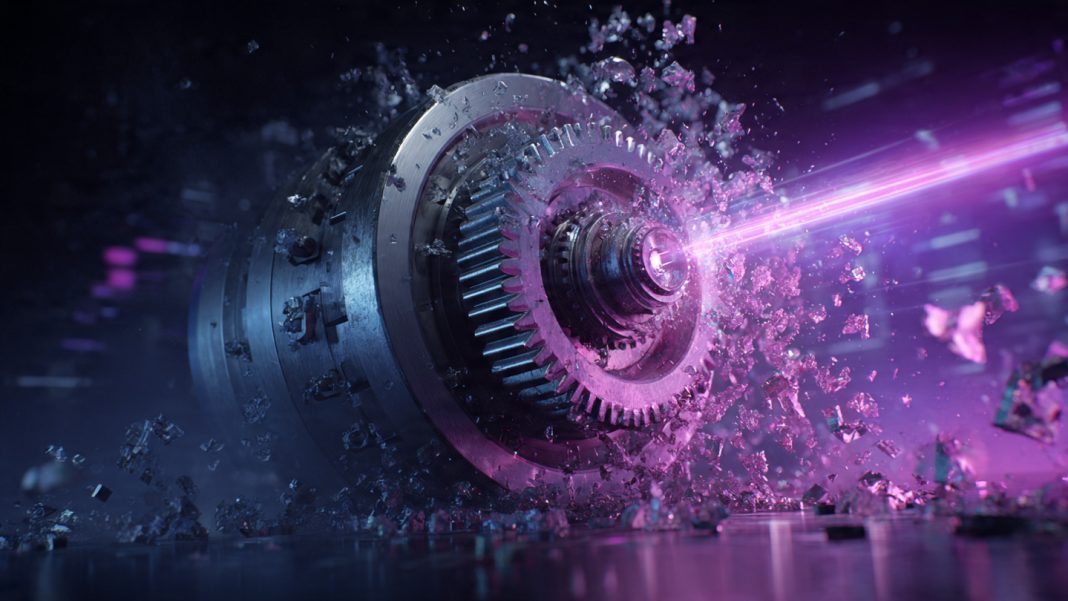
Imagine waking up one morning to find that every password you’ve ever used, every private message you’ve ever sent, and every financial transaction you’ve ever made is suddenly exposed to the world. The encrypted walls that protected your digital life for decades have crumbled overnight.
This isn’t the plot of a Hollywood thriller. It is the very real scenario that cybersecurity experts have been warning about for years. The arrival of fault-tolerant quantum computing threatens to shatter the foundations of modern data privacy. While fully operational quantum computers are not yet ubiquitous, the race is on—between those building the machines that can break our current encryption, and those developing the new cryptographic standards that can withstand them.
In 2026, we stand at a critical juncture. The impact of quantum computing on data privacy is no longer a distant, theoretical concern. It is a clear and present danger that governments, corporations, and individuals must prepare for. This is EthoFuture’s deep dive into the quantum tipping point.
The Encryption That Protects Your Digital Life
To understand the quantum threat, you must first understand the locks it aims to break. Almost all of our current digital security relies on two types of encryption:
- Symmetric Cryptography: Uses the same key to encrypt and decrypt data (like AES-256). This is used for securing files and data at rest.
- Asymmetric (Public-Key) Cryptography: Uses a pair of keys—a public key to encrypt and a private key to decrypt. This is the backbone of the internet. It secures your HTTPS connections (SSL/TLS), your emails (PGP), and even the cryptocurrencies in your digital wallet (RSA, ECC).
The security of asymmetric cryptography relies on the fact that certain mathematical problems—like factoring large prime numbers (RSA) or computing discrete logarithms (ECC)—are computationally “hard” for classical computers. It would take a classical computer thousands of years to break a 2048-bit RSA key.
The Quantum Threat: Why Classical Math Fails
Quantum computers operate fundamentally differently than the laptop or smartphone you’re reading this on. They leverage two principles of quantum mechanics: superposition and entanglement.
- Superposition: While a classical computer bit is either a 0 or a 1, a quantum bit (qubit) can exist as a combination of both 0 and 1 simultaneously. This allows quantum computers to explore many solutions at once.
- Entanglement: Qubits can be linked in such a way that the state of one instantly influences the state of another, no matter the distance.
This immense parallel processing power allows quantum computers to run algorithms that shatter classical cryptographic assumptions. The most famous of these is Shor’s Algorithm. Developed by mathematician Peter Shor in 1994, this algorithm proves that a sufficiently powerful quantum computer could factor large prime numbers exponentially faster than any classical computer. In theory, a quantum machine with enough stable qubits could break RSA-2048 encryption in a matter of hours, not millennia.
The “Harvest Now, Decrypt Later” Threat
Here is the most immediate and insidious danger: even though a large-scale, fault-tolerant quantum computer doesn’t exist yet, adversaries are already collecting encrypted data with the intent to decrypt it later. This is known as the “Harvest Now, Decrypt Later” (HNDL) attack.
State-sponsored actors and sophisticated cybercriminal groups are intercepting and storing vast amounts of encrypted internet traffic—emails, financial data, government communications, and personal records. They are betting that within the next 5 to 10 years, they will have access to a quantum computer powerful enough to unlock it all.
This means that the confidential document you send today, the medical record stored in a database, or the classified government memo could all become public in the future. The threat is not just to future secrets, but to the secrets of today. This concept is directly tied to the need for a sovereign individual career—owning and protecting your digital identity becomes paramount when the very fabric of trust is under siege.
The Great Migration: Post-Quantum Cryptography (PQC)
The good news is that the world is not standing still. Cryptographers have been working for decades on algorithms that are believed to be resistant to attacks from both classical and quantum computers. This new field is known as Post-Quantum Cryptography (PQC) .
PQC is not about using quantum physics to communicate (that’s Quantum Key Distribution, or QKD). It’s about creating new mathematical problems that are hard for both classical and quantum computers to solve.
In August 2024, a major milestone was reached. The U.S. National Institute of Standards and Technology (NIST) released its first finalized set of post-quantum encryption standards .
- ML-KEM (Module-Lattice-Based Key-Encapsulation Mechanism): Derived from the CRYSTALS-Kyber algorithm, this is the primary standard for general encryption, used to protect data as it travels across networks. It’s designed to be the successor to the key exchange mechanisms we use today for HTTPS.
- ML-DSA (Module-Lattice-Based Digital Signature Algorithm) and SLH-DSA (Stateless Hash-Based Digital Signature Algorithm): These are the new standards for digital signatures, used to verify identities and ensure that software updates, emails, and documents are authentic.
NIST’s announcement was the starting gun for the largest cryptographic migration in human history. Governments, financial institutions, and tech companies must now begin the arduous process of transitioning their systems to these new, quantum-resistant algorithms.
What This Means for Your Personal Data Privacy
The transition to PQC will not happen overnight. It will be a gradual, complex, and potentially messy process that will span the next decade. Here is what the impact of quantum computing means for you, the individual, in 2026.
1. The End of “Set It and Forget It” Security
You can no longer assume that the passwords and encryption protecting your data are safe indefinitely. The HNDL threat means that any data with long-term sensitivity (tax returns, estate planning documents, personal journals, intimate photos) is at risk. The concept of “digital dead drops” becomes a serious concern.
2. A New Era of Digital Certificates
Every time you visit a secure website, your browser checks its digital certificate (issued by a Certificate Authority, or CA) to ensure you’re on a legitimate site. All of these certificates, currently based on RSA or ECC, will eventually need to be re-issued using PQC algorithms. This is a massive logistical undertaking for the entire internet. Expect to see browser warnings and updates related to “quantum-safe” connections in the coming years, much like the shift from HTTP to HTTPS.
3. The Rise of Quantum-Safe VPNs and Messaging Apps
Forward-thinking companies are already developing quantum-safe VPNs and messaging applications. Signal, the gold standard for encrypted messaging, has already begun implementing hybrid protocols that combine existing encryption with PQC algorithms to protect against future quantum attacks. As a user, you should start looking for “post-quantum” or “quantum-safe” as a feature in your essential privacy tools.
4. The “Digital Identity” Crisis
Your digital identity—the collection of data that proves who you are online—is only as secure as the encryption protecting it. If a bad actor can use a quantum computer to forge your digital signature, they could impersonate you, sign documents in your name, or drain your bank accounts. The concept of digital identity security will become the defining personal challenge of the 2030s.
Industries That Will Be Hit Hardest
While everyone will be affected, some sectors face an existential crisis.
| Industry | The Quantum Threat | The PQC Imperative |
|---|---|---|
| Banking & Finance | Transaction data, customer accounts, stock market algorithms. A breach could destabilize markets. | Must migrate all payment rails, SWIFT systems, and customer-facing apps to PQC to maintain trust. |
| Healthcare | Patient records, genomic data, clinical trial results. Medical privacy laws (like HIPAA) mandate strict protection. | Healthcare providers must ensure all patient data, including decades-old archives, is migrated or re-encrypted. |
| Government & Defense | Classified communications, military intelligence, citizen data. This is a matter of national security. | Governments are leading the charge, with agencies like the NSA mandating a transition to PQC for all national security systems. |
| Legal & Intellectual Property | Legal documents, patents, trade secrets, merger negotiations. | Law firms and corporations must protect their most sensitive IP from the HNDL threat. |
| Technology (Cloud & SaaS) | The backbone of the digital economy. Cloud providers host data for millions of users. | Tech giants (Google, Amazon, Microsoft) must upgrade their infrastructure and offer PQC-ready services to their customers. |
The Quantum Clock Is Ticking: A Timeline
- 2026 (Now): NIST standards are published. Early adopters in critical infrastructure and tech begin testing and implementing hybrid PQC solutions. The HNDL threat is actively being executed by nation-states.
- 2028-2030: Widespread adoption of PQC begins. Major browsers, operating systems, and cloud providers start making PQC the default. Legacy systems that cannot be upgraded become a major vulnerability.
- 2030-2035: The first fault-tolerant quantum computer capable of breaking RSA-2048 is predicted by many experts to arrive. The “crypto-apocalypse” deadline. All sensitive data must be migrated by this point.
- Beyond 2035: Quantum-safe cryptography becomes the baseline. The focus shifts to auditing and securing data that was harvested before the transition.
The Ethical Dimension: A Double-Edged Sword
The impact of quantum computing on data privacy is not just a technical challenge; it is an ethical one. The same technology that threatens to expose our secrets also holds the potential to create unbreakable privacy through Quantum Key Distribution (QKD).
However, the path forward is fraught with ethical dilemmas:
- Surveillance vs. Security: Governments will inevitably want to retain some ability to access encrypted data for law enforcement and national security. The advent of unbreakable quantum encryption could fundamentally shift the balance of power between the state and the individual, a topic we explored in our piece on the ethics of generative AI and its societal impact.
- The Digital Divide: The transition to PQC will be expensive. Will developing nations be left behind, creating a new class of “crypto-poor” whose data is inherently less secure?
- The Open Source Imperative: For PQC to be trusted, the algorithms must be open-source and publicly audited. Proprietary, secretive “quantum-safe” solutions should be viewed with deep skepticism.
What You Can Do Right Now
Feeling overwhelmed? You’re not alone. Here is a practical checklist for 2026.
- Audit Your Long-Term Secrets: Identify any data you have that needs to remain confidential for the next 5-10+ years. This includes financial documents, legal wills, personal diaries, and family photos. Consider storing the most sensitive items in an offline, air-gapped drive or even a physical safe.
- Enable Hybrid PQC Where Available: Check your essential apps. Signal, Zoom, and some VPN providers are starting to offer “quantum-safe” or “hybrid” encryption options. Enable them.
- Demand Transparency: Ask your bank, your cloud storage provider, and your email host what their plan is for the quantum transition. A public, detailed roadmap is a sign of a forward-thinking, trustworthy company.
- Stay Informed: This is a rapidly evolving field. Follow reputable sources like NIST, the Global Risk Institute, and cybersecurity firms that specialize in quantum threats. Knowledge is your first line of defense.
- Strengthen Your Digital Hygiene: While we wait for PQC, double down on the basics: strong, unique passwords, hardware-based two-factor authentication (like YubiKeys), and regular security audits.
Conclusion: The Privacy Paradox of the Quantum Age
We are entering a paradoxical era. The very technology that promises to unlock the secrets of the universe also threatens to unlock our most private ones. The impact of quantum computing on data privacy is the single most significant technological challenge of the coming decade.
The migration to post-quantum cryptography is not just a technical upgrade; it is a societal imperative. It requires a coordinated, global effort to re-weave the fabric of trust that holds our digital world together. The choices we make in 2026—as individuals, as corporations, and as nations—will determine whether the quantum future is one of liberation or one of total exposure.
The clock is ticking. The harvesters are already in the field. It’s time to secure our digital future before it’s too late.
Aisha Khan is a seasoned Tech Analyst and the EthoFuture lead at Ethonce. She analyzes emerging trends at the intersection of humanity and innovation, with a focus on ethical AI, data privacy, and the future of work. Her insights help readers stay ahead of the curve in a rapidly changing technological landscape.