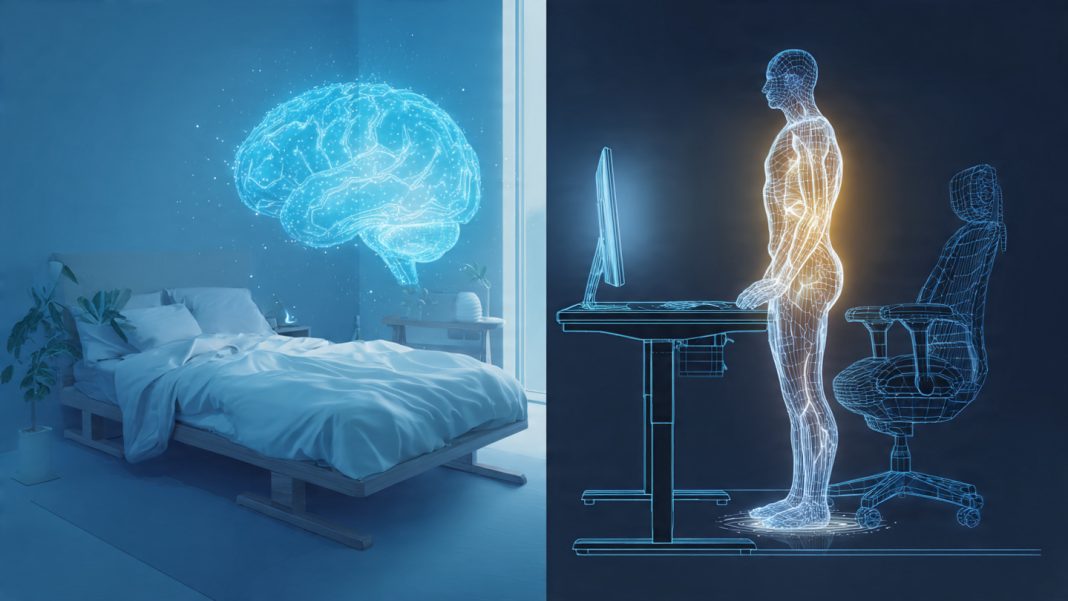
You’ve tried every productivity app. You’ve color-coded your calendar, adopted the PARA method, and blocked every distracting website known to humanity. Yet, by 2 PM, you hit the wall. Your brain turns to cotton, your focus shatters, and you find yourself staring blankly at the screen.
Here’s the uncomfortable truth most productivity gurus won’t tell you: You cannot optimize your output without first optimizing your biology.
In 2026, the most sophisticated productivity system in the world is useless if the hardware—your brain and body—is running on faulty wiring. This is where biohacking enters the conversation. Biohacking isn’t about extreme implants or living in a sensory deprivation tank. It is the practice of using science, biology, and self-experimentation to take control of your body’s operating system. For the modern professional, the two most critical areas to hack are not your to-do list, but your sleep architecture and your physical environment (ergonomics).
Welcome to PeakFlow’s definitive guide on biohacking for productivity. Let’s rebuild the hardware so the software can run at maximum capacity.
The Foundational Flaw: Why You’re Tired by 3 PM
Before we discuss the hacks, we must understand the biology of depletion. Your body runs on two primary currencies: adenosine triphosphate (ATP) for physical energy and neurotransmitters (dopamine, norepinephrine) for mental energy.
When you sit in a poorly designed workspace for eight hours, you don’t just get a sore back. You trigger chronic stress responses that flood your system with cortisol, depleting your dopamine reserves . When you sleep poorly, you prevent your brain from clearing metabolic waste (like beta-amyloid plaques) through the glymphatic system, leading to brain fog and reduced cognitive function .
In essence, poor ergonomics creates physical stress, which degrades mental focus. Poor sleep prevents brain repair, which makes you more susceptible to the physical stress of a bad workspace. It’s a vicious cycle that cannot be fixed with a better task manager. This cycle is often the hidden driver behind what many call founder burnout.
Part 1: The Science of Sleep Optimization
Sleep is not the absence of work; it is the most critical performance-enhancing activity you have. During deep sleep, your body repairs tissue, your brain consolidates memories, and your emotional centers reset. In 2026, we have more data on sleep than ever before, thanks to wearables and advanced research. Here are the non-negotiable protocols.
The Architecture of a Perfect Night
Sleep cycles through four stages multiple times a night. The most crucial for productivity are Slow-Wave Sleep (Deep Sleep) and REM (Rapid Eye Movement) Sleep.
- Deep Sleep: Responsible for physical restoration, growth hormone release, and memory consolidation. Without enough deep sleep, you cannot learn new skills effectively.
- REM Sleep: Where your brain processes emotions and creative connections. A lack of REM sleep leads to emotional irritability and a lack of creative insight—a death sentence for problem-solving.
Biohack #1: Master Your Circadian Rhythm
Your body runs on a 24-hour internal clock called the circadian rhythm. It is primarily regulated by light. When blue light (from the sun or screens) hits your eyes, it signals your brain to stop producing melatonin, the sleep hormone.
The Protocol:
- Morning Light (Before 9 AM): Get 10-15 minutes of direct sunlight (no sunglasses) within an hour of waking. This anchors your circadian rhythm and sets a timer for melatonin release 14-16 hours later.
- Daytime Bright Light: Expose yourself to bright, blue-enriched light during your work hours to maintain alertness. This is especially important if you work in a dim office.
- Evening Wind-Down (90-Minute Rule): Starting 90 minutes before bed, dim the lights and put on blue-blocking glasses (amber or red lens). This allows your melatonin to rise naturally. A recent study from Harvard Health confirms that blue light exposure at night suppresses melatonin for twice as long as other light wavelengths and shifts circadian rhythms by twice as much .
Biohack #2: Temperature Regulation for Deep Sleep
Your body temperature naturally drops to initiate and maintain sleep. If your bedroom is too warm, you disrupt this process.
The Protocol:
- Optimize Ambient Temperature: Keep your bedroom cool—between 65°F and 68°F (18°C-20°C). A cooler room facilitates the drop in core body temperature needed for deep sleep.
- Hot Bath/Cold Shower Hack: Taking a hot bath 60-90 minutes before bed causes your core temperature to rise, then rapidly drop when you exit, mimicking the body’s natural sleep signal. Alternatively, a brief cold shower increases metabolic rate and can help with falling asleep for some.
Biohack #3: Nutritional Timing and Sleep
What and when you eat profoundly impacts your sleep architecture.
- Caffeine Curfew: Caffeine has a half-life of 5-6 hours. That 3 PM espresso could still be blocking your adenosine receptors at 9 PM, preventing sleep pressure from building. Stop caffeine intake 10-12 hours before bed. If you struggle with focus during the day without caffeine, you might need to examine the root cause, which could be related to digital wellness strategies.
- Magnesium Glycinate: This form of magnesium is highly absorbable and promotes relaxation by binding to GABA receptors in the brain. Consider supplementing 200-400mg 30 minutes before bed.
- Alcohol is a Sleep Saboteur: While alcohol may help you fall asleep, it dramatically reduces REM sleep. You wake up feeling “rested” but are cognitively sluggish. If you drink, stop at least 3 hours before bed.
Part 2: Ergonomic Mastery for Cognitive Flow
Your body is not designed to sit in a chair for 10 hours. The modern desk job is a physiological anomaly. When you sit with poor posture, you aren’t just risking back pain; you are restricting blood flow and nerve signaling, which directly impacts brain function.
The “Sitting Disease” and Brain Fog
Slouching compresses your diaphragm, reducing lung capacity and oxygen intake. Your brain, which consumes 20% of your body’s oxygen, is the first organ to suffer. Furthermore, forward head posture (text neck) compresses the cervical spine, which houses the vertebral arteries that supply blood to the brain stem.
The result? Brain fog, reduced concentration, and increased fatigue. You can’t achieve a flow state if your body is physically compromised.
Biohack #4: The 90-Degree Rule for Seated Posture
When sitting at a desk, your goal is to achieve 90-degree angles at three key joints to maintain neutral spine alignment.
The Setup:
- Chair: Your hips should be at a 90-degree angle (or slightly open). Your feet should be flat on the floor. If your feet don’t reach, use a footrest.
- Knees: Knees should be at a 90-degree angle, with your thighs parallel to the floor.
- Elbows: Elbows should be at a 90-degree angle when your hands are on the keyboard. Your forearms should be parallel to the floor. Your wrists should be straight, not bent up or down.
- Monitor Height: The top of your monitor screen should be at or slightly below eye level. You should look slightly down at the center of the screen, not up. This prevents forward head posture.
Biohack #5: The Sit-Stand Dynamic Duo
Sitting all day is bad. But standing all day is also bad (it puts immense strain on your venous system). The solution is dynamic movement.
The Protocol:
- The 45-15 Rule: For every 45 minutes of sitting, stand for 15 minutes. This shifts the load on your spine and promotes blood circulation.
- The Walking Meeting: Whenever possible, take calls or brainstorm sessions while walking. Walking at a slow pace (2-3 mph) increases blood flow to the brain by 20% and can unlock creative insights.
- Invest in a Standing Desk Mat: If you’re using a standing desk, stand on a supportive anti-fatigue mat. Concrete or hardwood floors are brutal on your feet and lower back.
Biohack #6: Lighting for Cognitive Clarity
We discussed light for sleep, but light during the day is equally critical for focus.
- Circadian Lighting Systems: In 2026, smart lighting systems can mimic the sun’s natural progression. They pump out bright, cool, blue-enriched light in the morning to suppress melatonin and boost cortisol (healthy alertness), gradually transitioning to warm, dim light in the evening.
- Glare Reduction: Position your monitor perpendicular to windows to reduce glare. Glare forces your eyes to work harder, leading to eye strain and fatigue.
- The 20-20-20 Rule: For every 20 minutes of screen time, look at something 20 feet away for 20 seconds. This relaxes the ciliary muscles in your eyes and prevents digital eye strain.
The Biohacker’s Morning Routine for Peak Productivity
How you start your morning dictates your hormonal trajectory for the day. Here is a 60-minute protocol used by top executives and biohackers.
| Time | Action | Why |
|---|---|---|
| 0-10 mins | No phone. Hydrate with 500ml water + pinch of sea salt. | Rehydrates after sleep; salt supports adrenal function. |
| 10-25 mins | Bright light exposure (sunlight or 10,000 lux lamp). | Sets circadian anchor, increases alertness. |
| 25-40 mins | Movement (10 min walk, 5 min stretching, or 5 min light resistance). | Mobilizes joints, increases blood flow, lymphatic drainage. |
| 40-50 mins | Cold shower (30-60 seconds cold at the end). | Boosts dopamine by 250% , increases alertness and resilience. |
| 50-60 mins | Caffeine (only after the above). First high-value work block. | Caffeine hits a fully hydrated, alert system. No jitters. |
Tools Comparison: Biohacking Tech for 2026
To optimize your sleep and workspace, you need the right tools. Here’s a comparison of the best biohacking tech available.
| Category | Tool Name | Key Feature | Best For | Price Range |
|---|---|---|---|---|
| Sleep Tracker | Oura Ring Gen 4 | Accurate HRV, body temperature, sleep staging, and readiness score. | Non-intrusive, 24/7 biometric tracking. | $350-$400 |
| WHOOP 5.0 | Advanced strain and recovery coach; no screen, worn on wrist/bicep. | Athletes and high-performers focused on training load. | $30/month membership | |
| Light Therapy | HumanCharger | Light glasses that shine blue-green light into your ear canals to stimulate the brain’s light-sensitive areas. | Jet lag, shift work, and SAD. | $350 |
| Philips SmartSleep | Light therapy lamp with 10,000 lux output. | Morning circadian reset. | $100-$150 | |
| Ergonomics | Herman Miller Aeron | The gold standard in ergonomic chairs; unparalleled lumbar support and adjustability. | All-day desk workers. | $1,500+ |
| Uplift V2 Standing Desk | Highly stable, programmable height memory, wide range of eco-friendly desktops. | Sit-stand dynamic duos. | $600-$900 | |
| Air Quality | Molekule Air Pro | PECO technology destroys pollutants at a molecular level, including VOCs and bacteria. | Improving indoor air for cognitive function. | $1,000+ |
| Awair Element | Monitors CO2, VOCs, humidity, and temperature; provides actionable insights. | Tracking and optimizing your indoor environment. | $150 |
Real-World Case Study: The Founder Who Hacked His Way Out of Burnout
Meet Julian, a serial entrepreneur based in Berlin whom we first met in our guide on achieving flow state. Julian was the epitome of the “hustle” culture. He worked 14-hour days, survived on espresso and willpower, and sat in a $50 office chair. His sleep was erratic, his back was in constant pain, and his productivity was plummeting despite working more hours.
He came to me exhibiting classic signs of High-Functioning Burnout—successful on paper, but miserable and ineffective internally. We didn’t change his task list. We changed his biology.
The 90-Day Biohacking Intervention:
- Sleep First: We implemented the 90-minute wind-down protocol, removed all screens from the bedroom, and optimized his room temperature to 67°F. He started wearing an Oura Ring to track his progress.
- Ergonomic Overhaul: We replaced his office chair with a Herman Miller Aeron and set up his monitor at the correct height using the 90-degree rule.
- Morning Reset: We enforced the 60-minute no-phone morning routine with light exposure and movement.
The Results:
Within 30 days, Julian’s deep sleep increased by 45%. His back pain vanished. Within 90 days, he reported being able to accomplish more focused work in 4 hours than he previously did in 12. His company’s revenue grew not because he worked more, but because his brain finally had the biological resources to make better strategic decisions. His story is a testament to the fact that productivity is a biological output, not a time input.
The Mind-Body Connection: Why This Matters for PeakFlow
At PeakFlow, we understand that the mind and body are not separate. A cluttered, painful body creates a cluttered, distracted mind. By mastering sleep and ergonomics, you are not just preventing pain or fatigue; you are building the biological foundation for deep work, creative insight, and emotional resilience.
When your body is supported and your sleep is optimized, your nervous system shifts from a state of sympathetic dominance (fight or flight) to parasympathetic ease (rest and digest). In this state, you are more patient, more creative, and better equipped to handle the inevitable stressors of entrepreneurship.
Common Biohacking Mistakes to Avoid
- Chasing “Hacks” Before Building the Foundation: You don’t need a $1,000 infrared sauna if you’re sleeping 5 hours a night and eating processed food. Master the basics first: sleep, light, nutrition, movement.
- Data Obsession: Wearables are tools, not masters. If you obsess over every HRV fluctuation, you create stress. Look at weekly trends, not daily spikes.
- Ignoring the Psychological Component: Biohacking isn’t just about the body. Your mindset is a biological process. Practices like mindfulness, journaling, and gratitude are powerful “hacks” for the brain’s default mode network.
FAQ: Biohacking for Productivity
Q: I have a bad back. Should I use a standing desk all day?
A: No. Standing all day is as bad as sitting all day. Use a sit-stand desk and alternate every 30-45 minutes. If you have back pain, consult a physical therapist for a personalized ergonomic assessment.
Q: Can I catch up on sleep over the weekend?
A: You can pay back some “sleep debt,” but you cannot fully recover lost deep sleep or REM sleep. Consistency is key. Irregular sleep patterns confuse your circadian rhythm and lead to “social jetlag.”
Q: Do I need expensive supplements to biohack?
A: No. The foundation is free: light, movement, and timing of food. If you have the foundation solid and still struggle, then consider targeted supplements like magnesium glycinate or Vitamin D3 (after a blood test).
Q: How do I know if my workspace is truly ergonomic?
A: Take a photo of yourself from the side while working. Check the 90-degree angles. If you’re hunched or reaching, adjust. A simple rule: ears over shoulders, shoulders over hips.
Conclusion: Your Biology is Your Business
In 2026, you cannot afford to treat your body as an afterthought. The era of glorifying burnout is over. The new competitive advantage is sustainable, high-output performance, and that starts with biohacking your biology.
You don’t have to implement everything at once. Start tonight. Dim the lights 90 minutes before bed. Tomorrow morning, don’t touch your phone for the first hour. Next week, audit your chair height.
Your brain is the engine of your business. It’s time to give it the premium fuel and maintenance it deserves.
Dr. Israr Ahmad is a professional counselor and wellness expert focused on the mental health of high-achievers. Through the PeakFlow pillar at Ethonce, he provides science-backed strategies for digital wellness, executive focus, and burnout recovery.